
Moving House with Pets: A Heartfelt UK Guide
Moving house with pets in the UK? After 10+ years of helping families relocate, here's our heartfelt guide to keeping your furry family safe and calm.
HOME & FAMILY RELOCATIONS
Tomasz | Founder of Leovan Removals | Dad to Rudolph & Rosa (the cats) and proud caretaker of 12 Yellow Lab cichlids in my Lake Malawi aquarium 🐈🐠
6/23/202616 min read
Moving House with Pets: A Heartfelt Guide from a UK Family Removals Company
By Tomasz | Leovan Removals
I remember a move we did about three years ago. A lovely family in Aldershot was relocating to Hampshire with their elderly Labrador, Charlie. The husband called me a week before the move, completely panicked. "Charlie's stopped eating," he said. "We haven't even started packing yet, and he can tell something's happening."
That phone call has stayed with me for years — because it captures the truth about moving with pets that most people don't understand until they're living it. Your pet knows something is changing long before you've packed a single box.
After more than a decade helping families across Aldershot, Farnham, Surrey, and Hampshire relocate with their beloved pets, I've learned that moving with animals isn't really about logistics. It's about emotion. It's about patience. And most importantly, it's about love.
If you are relocating your whole family, read our guide on moving house with children and 10 family relocation tips.
If you're reading this because you're planning a move with your dog, cat, rabbit, or even your tropical fish — this guide is for you. Not the tick-box version you'll find on most websites. The honest, heartfelt version, written by someone who genuinely loves animals and has been doing this for a very long time.
📞 If you'd rather just talk to someone, call me directly: 07447 770 770
📋 Or request a free quote here and we'll be in touch.
A Quick Word About Me Before We Continue
I'm not just writing this as a removals guy who's seen a lot of pet moves. I'm writing this as a fellow pet owner who genuinely understands the anxiety you're feeling.
Let me introduce you to my own little family of animals.
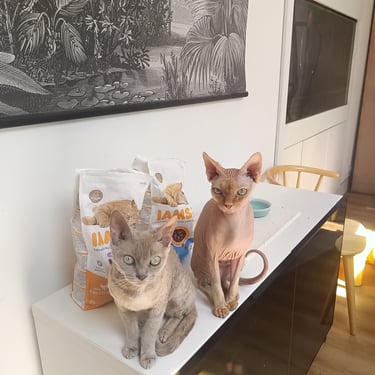
There's Rudolph — my big, magnificent boy cat who rules the household like a benevolent king. He's the one who'll come and sit on your lap whether you invited him or not, and he gives you that slow blink that says "you may continue stroking me, human."
Then there's Rosa, my beautiful lady cat. She's the more delicate, observant one — the one who watches everything from her favorite perch and decides whether new arrivals to the home are acceptable or not.
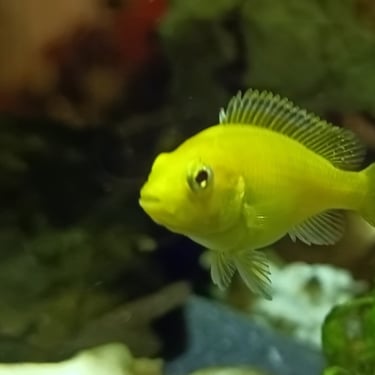
And down in the corner of my living room sits my pride and joy — a Lake Malawi aquarium with 12 stunning Yellow Lab cichlids (Labidochromis caeruleus, for the fish nerds among you), plus several babies who've recently joined the family. If you've ever kept African cichlids, you'll know they're not just fish — they're personalities. Each one has its own character, its own territory, its own preferences.
So when I talk about cat stress signals or the nightmare of moving a fish tank, I'm not just repeating what I've read somewhere. I've lived it. I've moved house with Rudolph and Rosa. I've had to relocate my Lake Malawi tank. I've made the mistakes and learned from them.
Everything in this guide comes from a combination of professional experience helping hundreds of families move their pets, AND personal experience as someone who lies awake worrying about whether Rudolph is eating enough, whether Rosa is hiding because she's stressed, and whether my Yellow Labs' water parameters are perfectly balanced.
If you take nothing else from this guide, take this: I genuinely understand what you're going through.
Why Your Pet is Already Stressed (Even Before Moving Day)
The first thing most people don't realize is that pets pick up on our emotions long before we say a single word. When you start researching new homes, when you begin worrying about mortgages, when you have those late-night conversations about whether you should accept the offer — your dog is listening. Your cat is watching. They feel the shift in your energy.
By the time you actually start packing, your pet has already noticed that something is different. The boxes appearing in the living room aren't really the start of their stress — they're more like the confirmation of what they've been sensing for weeks.
This is why preparation matters so much. The earlier you start gently introducing the idea of change, the better your pet will cope when moving day finally arrives.
Dogs tend to respond to the chaos by becoming clingier than usual. You'll notice they follow you from room to room, sometimes whining or pacing. Some dogs lose their appetite. Others, like Charlie, simply seem to wilt — quietly anxious, looking at you with those eyes that say "what's happening?"
Cats are more dramatic. Rosa, for example, will disappear under the spare bed for entire afternoons whenever I'm rearranging furniture, let alone packing. She'll stop using her litter tray if she's really stressed (which is heartbreaking and frustrating in equal measure). Rudolph, despite being the bigger and more confident cat, gets equally affected — he just channels his anxiety into demanding more food and more attention. Some cats become aggressive — hissing or scratching when they normally wouldn't. This isn't bad behavior. It's pure fear.
Rabbits and small pets show stress in subtle ways. They go quiet. They eat less. They might thump their feet at night or refuse to come out when you call them.
Fish — and people often forget this — also feel stress acutely. My Yellow Labs become more aggressive toward each other when their environment changes. They lose their vibrant color. Some hide in caves they've never used before. These are all stress responses, and they happen quickly.
The key thing to remember? They're not being difficult. They're scared. And the kindest thing you can do is acknowledge that fear and work with it, not against it.
Starting the Conversation Weeks Before the Move
I always tell my customers: "If you're moving in six weeks, start preparing your pet now."
The first thing I recommend is a visit to your vet. Not just for a check-up (though that's important too), but for a proper conversation about your specific pet's needs. Some animals genuinely benefit from a short course of anxiety medication during moves. Others do better with natural calming aids like Feliway diffusers for cats or Adaptil for dogs. Your vet knows your pet, and they'll give you advice tailored to your situation.
While you're there, ask for copies of your pet's medical records and make sure their microchip is registered to your new address — not your old one. This is something so many people forget, and it can be devastating. If your pet escapes during the move (which happens more often than you'd think), the microchip company will phone whoever owns that registration. If it's still your old address, you might never get them back.
Once the vet visit is sorted, start bringing moving supplies into your home gradually. Don't pile twenty boxes in the corner overnight — that's overwhelming. Instead, bring in one or two boxes a week. Let your cat sniff them. Let your dog see you opening and closing them. Make these things feel normal, not threatening.
For cats especially, I recommend leaving their carrier out in the room weeks before the move. Put treats inside. Put their favorite blanket in there. Make it feel like a safe space rather than the dreaded "vet trip box" that only appears when something scary is about to happen.
I'll be honest — even after years of doing this professionally, both Rudolph and Rosa STILL hide when I bring out their carriers. They give me that look that says "we know what this means, and we don't approve." So when I tell you to leave the carrier out for weeks beforehand with treats inside, I'm not just giving you textbook advice. I'm telling you what I do with my own cats — and what genuinely works, even when they're being dramatic about it.
The Week Before Moving Day
This is when most people start to feel the stress, and unfortunately, your pet feels it tenfold.
Try to keep your pet's routine as normal as possible. Same feeding times. Same walk times. Same bedtime cuddles on the sofa. I know it's hard when your life feels like it's been turned inside out, but those small consistencies are everything to your pet. They're the anchors that tell them "we're still us — we're still here."
If you have an outdoor cat, keep them indoors for at least a week before the move. I cannot stress this enough. Cats have a remarkable ability to sense when something is about to happen, and they will sometimes disappear for a few days right before moving day. Imagine the horror of trying to find your cat the morning you need to leave forever.
For dogs, try to schedule extra walks in the days leading up to the move. A tired dog is a calmer dog. Long walks also give them something familiar and comforting to look forward to amid all the chaos.
And here's something most websites won't tell you: don't wash their bedding. I know it sounds counterintuitive, but those familiar smells are like a warm hug for your pet. The blanket that smells of them, of your old home, of their favorite spot on the sofa — that's gold dust when everything else feels different. Save the washing for after you've settled in.
This applies to fish too, actually. Don't deep-clean your filter or replace filter media in the weeks before a move. The beneficial bacteria living on your filter media are essential to your tank's ecosystem, and they take weeks to re-establish if you disturb them.
Moving Day Itself: The Three Best Options
When the big day finally arrives, you have three main options for how to handle your pet. After helping hundreds of families move, I can tell you honestly that one of them is dramatically better than the others.
The best option, by far, is to have your pet stay somewhere else for the day. A trusted family member, a friend who loves animals, a professional pet sitter, or even doggy daycare. Removing them from the chaos entirely is the kindest thing you can do. They don't have to witness strangers carrying their bed out the door. They don't have to see their familiar world being dismantled. They get picked up later when everything is calm again. If you can possibly arrange this, please do.
The second option is to keep them in one secure room. Pick the quietest room in the house — usually a spare bedroom or bathroom. Set it up the morning of the move with their bed, water, food bowl, litter tray for cats, and a few favorite toys. Put a clear sign on the door: "PLEASE DO NOT OPEN — PET INSIDE." And please, please tell your removals team about the room before they start. We always ask, but it's better to over-communicate.
I'll never forget one move where the owner forgot to mention the cat was in the bathroom. One of my team opened the door to grab something, the cat shot out, and we spent three hours finding her hiding in a neighbor's shed two streets away. The owner was in tears. The cat was fine, but it was an awful experience for everyone — completely avoidable with a simple sign and a quick word with us.
The third option, if you must, is to keep them with you in your car. This works for some dogs, especially those used to car travel. It's harder for cats, who often hate the car and add their own stress to an already stressful day. If you go this route, use a proper carrier or harness, take frequent breaks, never leave them alone in a parked car (especially in summer), and try to keep things calm and quiet.
One thing I'll say firmly: please don't ever put your pet in the back of the removal van. I know this sounds obvious, but I've actually had people ask if we can transport their dog with the furniture. The van doesn't have windows, it doesn't have climate control, and it's full of heavy items that could shift. It's simply not safe.
What Dogs Need vs. What Cats Need
Dogs and cats are completely different creatures when it comes to moving, and treating them the same is a mistake.
Dogs need leadership. They look to you to know how to feel about a situation. If you're calm, they'll try to be calm. If you're panicking, they'll panic too. On moving day, this is honestly one of the hardest parts — you're stressed, things are going wrong, you've got a million things to organize, and your dog is staring at you wanting reassurance.
The best dog-related moving advice I can give is this: build in time to just be with your dog. Even five minutes of sitting on the floor stroking them, telling them everything is okay, makes a difference. Take them outside for a proper walk in the morning before the chaos starts. Bring their favorite chew or toy and let them have it in their safe room. Give them something positive to focus on amid all the strange activity.
When you arrive at the new house, dogs generally settle within a day or two. They're pack animals — as long as their pack (you) is with them, they adapt. Walk them around the new garden on a lead before letting them off. Walk the same route around the new neighborhood for several days so they start building a mental map. Stick to their feeding schedule religiously. Most dogs are happy and curious about new homes within a week.
Cats are entirely different beings. They don't see you as a pack leader — they see themselves as the actual ruler of the household (Rudolph certainly does). To a cat, moving isn't just stressful; it's an existential crisis. The territory they've spent years scent-marking, patrolling, and defending has been replaced by an unfamiliar space full of strange smells.
The most important rule with cats is this: keep them indoors for at least two weeks after moving. I know your cat will hate you for it. Rosa gave me death stares for the entire two-week confinement period after our last move. I know they'll sit by the window staring out and meowing. But if you let them out too soon, many cats will try to walk back to their old home — sometimes for miles, sometimes for days, sometimes never returning at all.
When you do finally let them out (and please, only do this if you're moving to a safe area), do it just before their dinnertime so they're hungry and motivated to come home. Open the door, let them have a brief look around the garden, then call them in with food. Do this for several days before allowing longer trips outside.
In the meantime, set up a "safe room" for them. One room with their bed, food, water, litter tray, and favorite toys. Close the door for the first day or two. Let them adjust to one space before opening up the whole house. After two or three days, open the door and let them explore at their own pace. Don't force anything. They'll come out when they're ready.
With Rudolph and Rosa, the pattern was very different. Rudolph emerged from his safe room within 12 hours, demanding to inspect every corner of the new house and approve of his new domain. Rosa took nearly a week before she'd venture beyond the spare bedroom. Both responses are completely normal. Every cat is an individual.
A Word About Smaller Pets (And My Beloved Yellow Labs)
Rabbits, guinea pigs, hamsters, birds, fish, reptiles — all of these need special consideration that often gets overlooked.
Rabbits and guinea pigs are actually surprisingly delicate when it comes to stress. They can develop serious health issues if they get too anxious. Transport them in their regular cage if possible — the familiarity helps enormously. Cover the cage partially with a light cloth to reduce visual stimulation. Keep them away from extreme temperatures (rabbits especially can overheat very quickly). And set up their proper hutch immediately upon arrival — don't make them wait.
Birds are sensitive souls. Use a small, dark travel cage rather than their large home cage. The darkness helps keep them calm. Cover the cage during transport with a breathable cloth. Avoid drafts at all costs. Once you arrive, give them at least 24 hours to settle in their travel cage before transferring them to their main home — sudden changes can cause panic.
Reptiles need their heat source as a priority. Use a portable heat pack in the transport container if it's cold weather. The moment you arrive, set up their heat lamp before anything else — even before you've moved their enclosure into position. Reptiles can become seriously ill if their body temperature drops too low for too long.
Hamsters and small rodents need an escape-proof carrier with familiar bedding (don't wash it!). Keep the journey as short as possible and cover the carrier from bright lights.
Now Let's Talk About Fish — Because This One's Personal
I keep a Lake Malawi aquarium at home, currently home to 12 stunning Yellow Lab cichlids (Labidochromis caeruleus) plus several babies who've joined the family recently. So I can tell you from genuine experience: moving a fish tank is one of the most stressful and complex aspects of any house move, even for someone who knows what they're doing.
My Yellow Labs are gorgeous, but they're also fussy. They've spent years in carefully balanced water with specific pH levels, mineral content, and temperature ranges that mimic the natural conditions of Lake Malawi. They have their own territories within the tank, their own social hierarchies, their own preferred caves. Disrupting all of that is a serious undertaking.
Here's what I've learned from moving my own setup:
Plan weeks in advance. Fish moves can't be rushed. I started preparing buckets of carefully aged tank water a week before our move. I made sure I had clean, dechlorinated water ready for emergency refills.
Keep your filter media wet. This is absolutely critical. The beneficial bacteria living on your filter media are what keep your tank healthy — they convert toxic ammonia into safer compounds. If those bacteria die during transport, your tank essentially has to cycle again, which can take weeks and seriously stress (or kill) your fish. Keep filter media submerged in tank water during transport in sealed containers.
Transport fish in tank water, not fresh water. I used specialist breather bags from my local aquatic shop, filled with my own tank water, with the bags partially inflated to ensure plenty of oxygen. The fish themselves go in dark containers (a polystyrene box is perfect) to reduce stress.
Set up the tank FIRST at the new home. Before unpacking a single box of your own belongings, get that aquarium running. Fill it with the aged water you prepared, install the filter immediately (with the wet bacteria-rich media), heat the water to the correct temperature, and let it stabilize.
Acclimate slowly. Float the fish bags in the tank for 15-30 minutes to equalize temperature. Then slowly add small amounts of tank water to the bags over the course of an hour. Only then release the fish.
Monitor obsessively for days afterward. Test your water parameters daily. Watch for stress signs — color loss, hiding, aggression, loss of appetite. Be ready to do partial water changes if ammonia or nitrite levels spike.
Moving my Yellow Labs was one of the most stressful days of my own move — and I do this for a living. If you have an aquarium and you're feeling overwhelmed, I completely understand. Take photos of your tank setup before you dismantle it so you can recreate the layout. Plan the move during the coolest part of the day. And give yourself permission to take longer than you expect.
Trust me — I'm speaking from experience here. There's something special about watching your fish settle back into their new home, swimming through their familiar caves and reclaiming their territories. Worth every minute of the stress.
The First Few Days in Your New Home
When you finally arrive at your new home, the temptation is to throw open all the doors and start unpacking immediately. Please, for your pet's sake, don't.
Set up their safe space first. Their bed, their bowls, their litter tray (for cats), their favorite toys, that unwashed blanket that smells like home. Choose a quiet room away from the front door where there'll be the least disturbance from movers coming in and out. This becomes their sanctuary while the rest of the house is sorted.
Resist the urge to introduce them to the entire house on day one. It's too much. They've already had a stressful journey. They need a small, manageable space to decompress before tackling a whole new environment.
Over the next few days, gradually open up more of the house. Let your dog explore room by room, on a lead at first if they seem unsure. Let your cat emerge from her safe room when she's ready (don't drag her out — she'll come when she's brave enough). Watch their body language. If they look anxious, give them more time.
The first night is often the hardest. Your pet will likely be unsettled. Dogs might whine. Cats might meow loudly or hide. This is normal. Don't panic and don't fuss too much — calm reassurance is what they need, not anxious attention. By the second or third night, things usually start to settle.
When Things Don't Go to Plan
Sometimes, despite your best efforts, things go wrong. Pets escape. They refuse to eat. They hide for days. They develop stress-related illnesses.
If your pet escapes, don't chase or shout — this will frighten them further. Stay calm. Search nearby areas first, especially anywhere they might have been heading. For cats, leave food and an unwashed item of clothing outside both your new home and your old one. Many cats return to familiar territory. Contact local vets, the RSPCA (0300 1234 999), and post on local Facebook groups immediately. Update your microchip company.
If your pet stops eating for more than 24 hours (or 12 hours for very small pets), call your new vet. Stress can sometimes mask or trigger other health issues.
If your cat hides for days, that's actually normal. They might only come out at night to eat and use the litter tray. Don't drag them out. Just keep providing food, water, and gentle reassurance. They'll emerge when they're ready — usually within a week.
And if you ever feel overwhelmed by your pet's distress, please don't suffer in silence. Talk to your vet. Talk to fellow pet owners. Talk to anyone who'll listen. You're not failing — moving with pets is genuinely hard, and acknowledging that is the first step to getting through it.
Why I Care So Much About This
I want to be transparent about why I care so much about pet moves.
Beyond running Leovan Removals, I'm a genuine animal lover. My home is shared with Rudolph (my magnificent big boy cat), Rosa (my elegant lady cat), and a Lake Malawi aquarium containing 12 Yellow Lab cichlids plus their growing family of babies. They're not just pets — they're my family, my responsibility, my joy.
When a customer calls us about a move and mentions they have a nervous rescue dog, or a fish tank that's been running for 8 years, or a 17-year-old cat who hates change — I genuinely understand. Not because it's good for business. Because that's my life too.
When we move your pets, we're not just doing a job. We're treating your animals the way I'd want someone to treat Rudolph, Rosa, and my Yellow Labs.
How We Try to Help at Leovan Removals
At Leovan, we're not just a removals company that happens to tolerate pets. We're animal lovers. Most of our team have pets of their own. We genuinely care about getting this right.
What does that look like in practice? It means we ask about your pets when you book a quote — what type, what age, how they cope with strangers. It means we plan our routes to minimize the time your pet has to spend in their safe room. It means we work quietly around nervous animals, knock before entering rooms where pets are kept, and double-check doors before they close. It means if your dog wants to come and say hello, we'll happily stop and have a fuss with them.
And it means that if your move is in Aldershot, Farnham, Guildford, Fleet, or anywhere else across Surrey, Hampshire, London, or the UK — we'll treat your pets with the same care and respect I'd want for Rudolph, Rosa, and my Yellow Labs.
If that's the kind of removals team you'd like for your move, I'd love to hear from you.
Let's Make Your Move Stress-Free for Everyone
Whether you're moving across town or across the country, whether you have one Labrador or three cats and a parrot or a magnificent aquarium — we'd love to help.
📞 Call Tomasz directly: 07447 770 770
📋 Get a free, no-obligation quote
⭐ Read our verified Checkatrade reviews
📋 Download our free moving checklist
I'd love to chat about your move and your pets — call any time, no pressure, no salesy nonsense. Just two animal lovers having a conversation about how to keep your furry, feathery, or fishy family safe.
— Tomasz (and unofficially, Rudolph & Rosa)
About Leovan Removals
We're a family-run removals company based in Surrey, serving Aldershot, Farnham, Fleet, Guildford, and across Hampshire, London, and the UK. We've spent over a decade earning our reputation as the kind of removals team people genuinely recommend to their friends — partly because of how we move boxes, but mostly because of how we treat people (and their pets).
Fully insured. Five-star rated. And the founder is owned by two cats and 12+ Lake Malawi cichlids — so trust me, we get it.


Get in touch
Contact Tomasz
© 2012–2026 All rights reserved.






24-hour emergency removals available — by appointment



Find us and review us on:
12 Morland Rd Aldershot GU11 3SB